
You made something with your hands, and now you want to sell it.
But the craft market online is crowded right now, and the platform options are confusing.
Some take 15-30% fees (and a kidney 😂), some want monthly subscriptions, and some promise traffic but never actually deliver it.
If you’re looking for the best places to sell crafts online, here’s what actually matters:
- the platform needs real buyers, not just other sellers browsing for ideas.
- The fees need to make sense for your price point.
- And you need to be willing to learn how each platform works instead of just listing your stuff and hoping.
In this post, I’ll cover different places to sell crafts online, broken down by what each one does well and who should skip it.
TL;DR
The best places to sell crafts online depend on your product type and goals. If you’re deciding where to sell crafts:
- Etsy works for handmade items and gets the most craft-specific traffic.
- Amazon Handmade reaches buyers who already shop on Amazon.
- Shopify gives you full control, but you bring your own traffic.
- Local platforms like Facebook Marketplace work fast for one-off sales.
- Pick based on where your buyers already shop.
This post contains affiliate links (including Amazon Associate links). If you make a purchase through these links, I may earn a small commission at no extra cost to you. As an Amazon Associate, I earn from qualifying purchases. Please read full disclosure for more information. I also use AI to help me write, but I tell it exactly what to say based on my results and experiences.
Best places to sell crafts online: General craft marketplaces
1.) Etsy
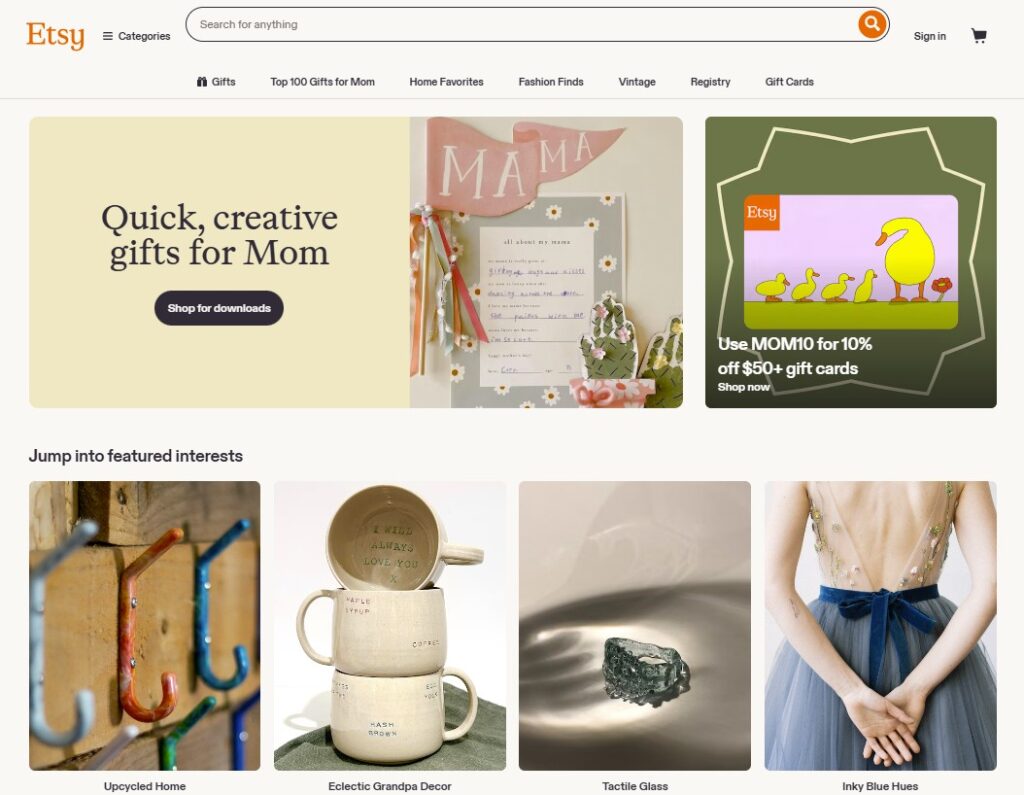
Etsy is still the default craft marketplace in 2026. And when people ask where to sell crafts online, Etsy is almost always the first answer.
That’s both good and bad.
Good because it gets 400+ million visits per month, and people go there to buy handmade items.
Bad because there are millions of active shops and your products can get buried fast if your SEO isn’t sharp.
The platform charges 6.5% per sale plus a $0.20 listing fee per item.
Most sellers also pay for Etsy Ads because organic visibility is playing hard to get 😜
Etsy works best for jewelry, home decor, wedding items, personalized gifts, and printable digital products.
After years of watching craft sellers use it, I’ve noticed a pattern.
The ones who do well treat Etsy like a search engine. They research keywords before uploading anything, and write titles that match what buyers actually type into the search bar.
The ones who struggle usually focus on making beautiful photos with vague titles like “Handmade Necklace.” No wonder nobody’s buying.
Etsy will also suspend your shop if you’re selling mass-produced items or dropshipping. It only allows handmade, vintage (20+ years old), or craft supplies.
And sometimes they suspend shops just because they feel like it. Unfortunately, I’ve seen too many people in Facebook groups complain about that.
In my opinion, this platform is worth it if you have a niche product, and you’re willing to learn how the algorithm works.
P.S. If you need ideas, here are 17 Easy Crafts to Sell That Make a Profit Fast.
2.) Amazon Handmade
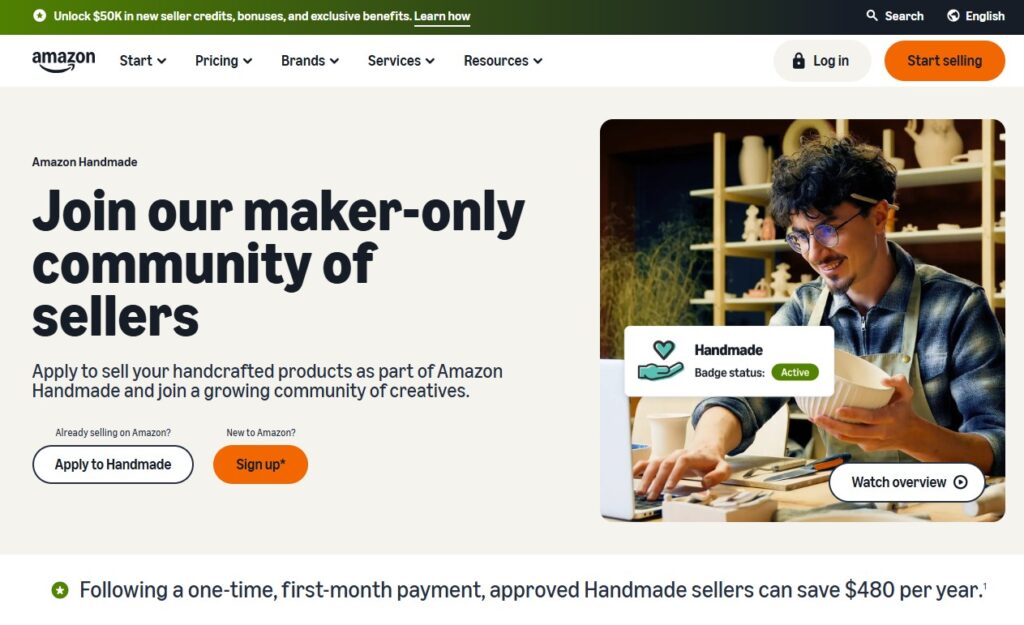
Amazon Handmade gets you in front of its huge customer base without competing against mass-produced junk.
There’s no listing fee, but Amazon takes 15% per sale.
You need to apply and get approved, which takes a few weeks.
They’ll ask for photos of your workspace to confirm you’re actually making the items yourself.
What you need to know is that buyers on Amazon shop are different than buyers on Etsy:
- They want high-quality items that look professional, whether they’re functional or decorative.
- While categories like home organization and baby items are huge, decorative art and jewelry also perform exceptionally well because Amazon shoppers value speed and trust above all else.
This platform will work if you’re ready to scale and you’re comfortable with how Amazon operates.
3.) eBay
eBay isn’t just for used stuff, even though most people still think so.
A lot of craft sellers use it for handmade items, especially higher-priced pieces or vintage-inspired crafts.
The final value fee is 13.5% for most categories plus a $0.30 per order fee.
While there’s no monthly subscription required, most sellers get 250 free listings per month before paying an insertion fee.
eBay works well for handmade furniture, vintage-style jewelry, collectible crafts, and one-of-a-kind art pieces that photograph really well.
The auction format can help you test pricing without committing to a fixed one. I think that is useful when you’re not sure what people will pay.
Buyers on eBay expect detailed photos and descriptions. They want to see every angle and every detail, so make sure you show it.
If you’re good at presenting your work visually and you can write clear descriptions, eBay could be the best choice for you.
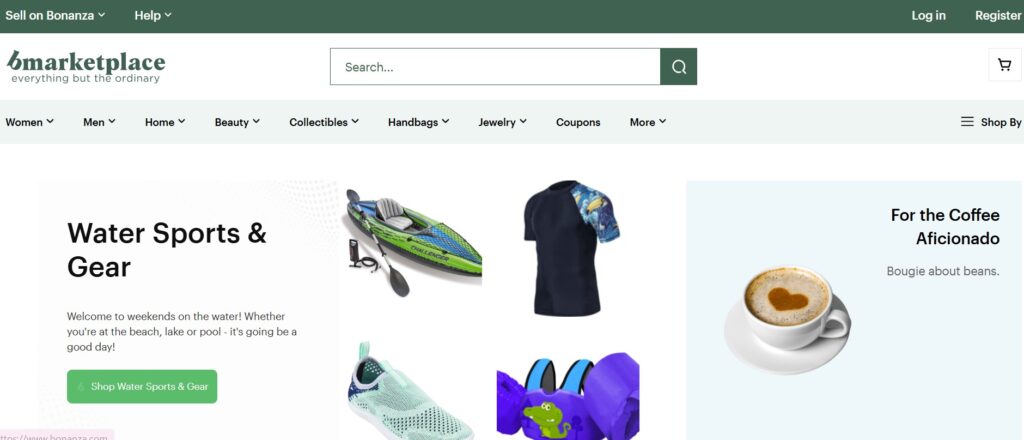
4.) Bonanza
Bonanza charges a 3.5% to 5% base commission on the final price, which is lower than almost every other platform.
You can also sync your Etsy, eBay, or Shopify listings directly, so setup is fast and it keeps your inventory updated.
But the traffic is much lower than Etsy or Amazon, so don’t count on this as your main income source right away.
In my opinion, Bonanza is worth adding once you already have traction somewhere else.
If you’re just starting out and you don’t have a big following or an email list, skip Bonanza for now.
Start where the buyers are, get consistent sales, and then expand.
Specialized craft platforms
1.) iCraft
iCraft is a Canadian-based marketplace founded in 2007. It survived while many other craft sites disappeared because it uses a different business model.
Instead of charging a commission on every sale, they have a one-time $25 registration fee and a flat monthly subscription (around $10 to $15, depending on your plan).
This means they take 0% commission when you make a sale. In my opinion, that’s great, especially if you make a lot of sales.
But the traffic is lower than Etsy, so keep that in mind.
iCraft works well for handmade jewelry, knitted items, pottery, and handmade soaps.
If you’re in Canada or you sell internationally and you want to reach buyers who support smaller independent marketplaces, iCraft might work for you.
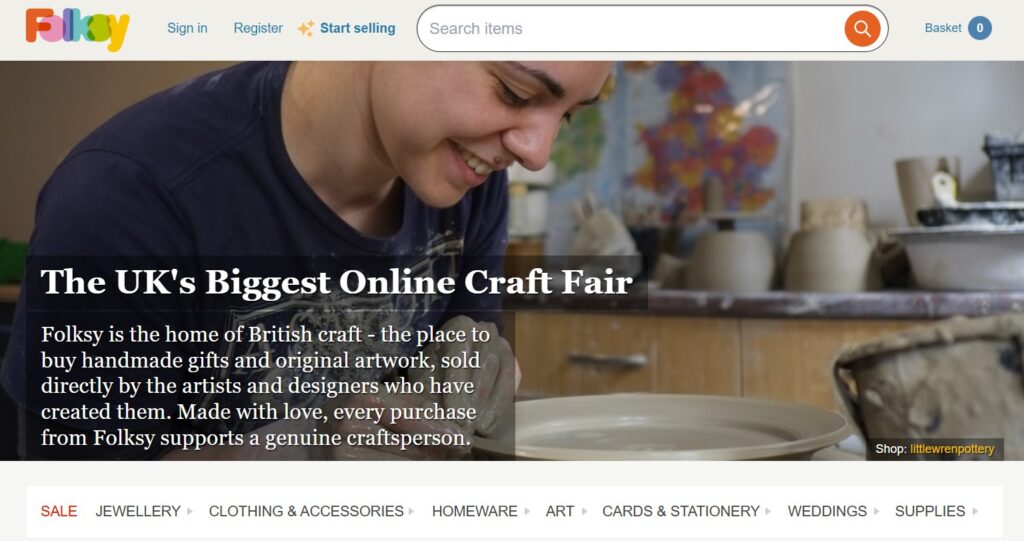
2.) Folksy
Folksy is often called the UK version of Etsy. It charges £0.15 + VAT per listing and a 6% + VAT commission on the sale price (excluding postage).
If you’re based in the UK, Folksy is worth testing because it is exclusively for makers located in the UK, the Channel Islands, or the Isle of Man.
This means you aren’t competing with global mass production. It’s perfect for traditional crafts, knitting, and handmade jewelry that appeal to British buyers.
The audience is smaller than Etsy’s, so you’ll have lower competition and a more supportive vibe.
In my opinion that’s great, especially if you want to build a loyal local following before worrying about the logistics of international shipping.
Social commerce platforms
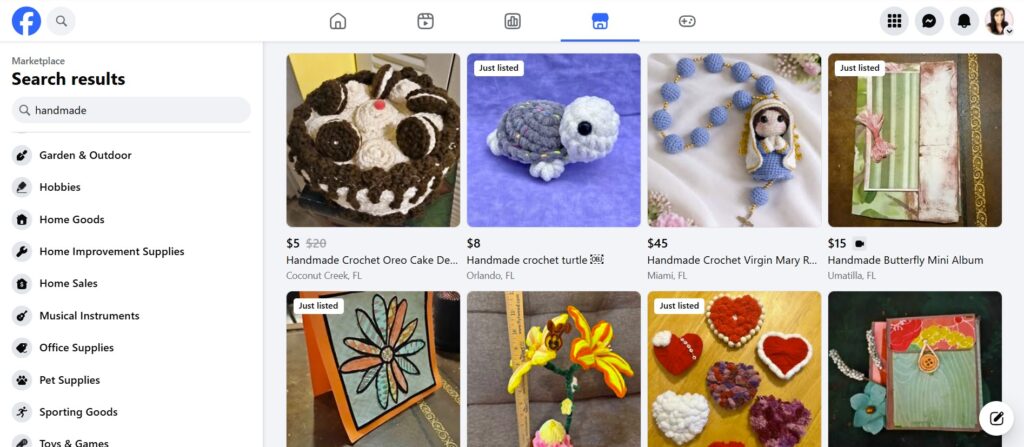
1.) Facebook Marketplace
Facebook Marketplace is free to list, and you only pay fees if you use their checkout system for shipping.
For shipped orders, they take 10% of the total sale (minimum of $0.80).
But local sales are completely free with zero platform fees. That’s why it works best for in-person pickups, where you keep 100% of the money.
Facebook Marketplace is a good fit for larger craft items like furniture, wall art, and home decor that would be expensive or risky to ship.
The downside is that local buyers often want to negotiate on price. They can also show up late or ask a million questions before buying. It can get annoying.
So if you can handle that and you’re comfortable with local pickup, Facebook Marketplace might be a great choice.
But if negotiating with strangers makes you want to throw your phone out the window, stick to other platforms where the price is the price.
2.) Instagram Shopping
Instagram Shopping lets you tag products in your posts and stories.
For businesses in the US, buyers can purchase without leaving the app using Instagram Checkout.
But in most countries, it sends buyers to your own website.
You need a professional account, a Facebook page, and a product catalog set up in Meta Commerce Manager.
Instagram Shopping works best for crafts that look great, like jewelry, clothes, and candles.
When buyers pay inside the app, Meta takes a 5% fee. But if they buy on your website, you just pay your usual fees to PayPal or Stripe.
Now this is the most important part:
If your Instagram is a ghost town, this won’t be the right fit. You still need to show up and make posts that get visibility.
3.) TikTok Shop
TikTok Shop launched in the US in 2023 and has grown FAST.
You can sell directly through TikTok videos and live streams.
The platform takes a 6% commission on most sales, though some categories like jewelry are 5%.
TikTok Shop works best for craft items with a strong visual hook or a quick “how it’s made” angle.
Resin art, custom tumblers, handmade keychains, and personalized gifts do well because they’re fast to show and satisfying to watch.
So if you’re comfortable on camera and you love making short, engaging videos, TikTok Shop can drive a lot of impulse purchases.

4.) Pinterest Shopping
Pinterest isn’t a marketplace, but you can sell through it by setting up product pins that link to your store.
You don’t need Shopify or WooCommerce specifically, as you can connect almost any website by uploading a data source or using the Pinterest tag.
In the US, some stores can use hosted checkout, so buyers can purchase without leaving Pinterest.
This platform works best for crafts that fit a lifestyle look. Home decor, wedding items, and baby gifts do great because people add them to inspiration boards.
If you’re already getting Pinterest traffic to your website, adding shoppable pins can turn those viewers into buyers faster.
But if you’re just starting, you need to know it takes time to build it up.
You also need to understand how Pinterest search works. It’s not a social media platform, but a search engine.
I wrote this guide on how to find keywords that boost your visibility.
In my opinion, this is the best platform. I’m a bit biased, though, because Pinterest sent 252,583 people to my blog in 2025.
Your own website platforms
1.) Shopify
Shopify is the most popular platform for building your own online store.
You pay a monthly subscription. It’s usually $39 to $399, depending on the plan, but they often have deals where you pay $1 for the first few months.
You keep your profit, but you still pay payment processing fees (about 2.9% + 30 cents).
If you don’t use Shopify’s own payment system, they also charge an extra transaction fee of 0.5% to 2%.
What a lot of people don’t get about Shopify is that the platform doesn’t bring you customers.
It only gives you the store, but you’re responsible for driving traffic to it.
So I recommend you start using Pinterest for your business, or any other platform you love.
Build the visibility first, or you’ll be wasting a lot of money before you make your first sale.
Shopify works best for those who are serious about building a brand and want full control over their pricing, branding, and customer data.
If you’re ready to handle your own marketing, and you don’t want to give up 6.5% or 15% of every sale, Shopify makes sense.
And if you’re looking for ideas to create, I’ve put together these 35 Crafts That Sell Well And Make You Money.
2.) WooCommerce
WooCommerce is a WordPress plugin that turns your website into a shop.
It’s free to install, but you still have to pay for your website hosting and your domain name every year.
I’ll be honest with you. I tried WooCommerce 5 years ago, but it was too complicated for me.
I’m just not a patient person 😅, and I didn’t want to spend my life staring at tutorials trying to figure it out.
The setup is more technical, so you’ll probably need to look up how to do things or ask for help at the start.
The long-term cost can be lower for big shops. You aren’t paying a large monthly fee as you do with Shopify, but you still have to pay for your hosting to keep the site alive.
WooCommerce makes sense if you already know WordPress or want to learn it.
If you hate tech and want something that works right away, the next option will work best.
3.) Payhip
I love Payhip because it’s so easy to use. I have my store on it and recommend it to everyone.
You can sell digital stuff, but you can also sell physical products like your handmade crafts.
Payhip has a few different plans. And every single plan gives you all the features. The only difference is how much you pay.
- The Free Plan: You pay $0 a month, but Payhip takes a 5% fee when you make a sale. This is perfect if you’re just starting and don’t want to pay monthly.
- The Plus Plan: This costs $29 a month, and the fee drops to 2% per sale.
- The Pro Plan: This costs $99 a month, and there are 0% fees.
It’s great for people who want to start a shop in minutes without all that tech headache.
You just upload your product, set a price, and you’re ready. It also handles things like taxes for you, which can save a lot of time.
If you want something that just works and lets you sell both crafts and digital products, Payhip is for you.
Local and community platforms
1.) Craigslist
Craigslist is free to list in most categories, and it’s all local.
There are no transaction fees because buyers pay you directly with cash or a payment app when you meet up.
It works best for big craft items like furniture, outdoor decor, or heavy items that would cost a fortune to ship.
But the buyers can be exhausting though. They’ll ask if your price is firm, and then offer you half of what it’s worth 🙄
They’ll schedule a pickup and then ghost you. They might even show up 30 minutes late with a friend who “just wants to look.”
So if you can deal with that and you’re okay with local pickups, Craigslist still works in 2026.
Just keep in mind that many people have moved to Facebook Marketplace, so the crowd here is smaller than it used to be.
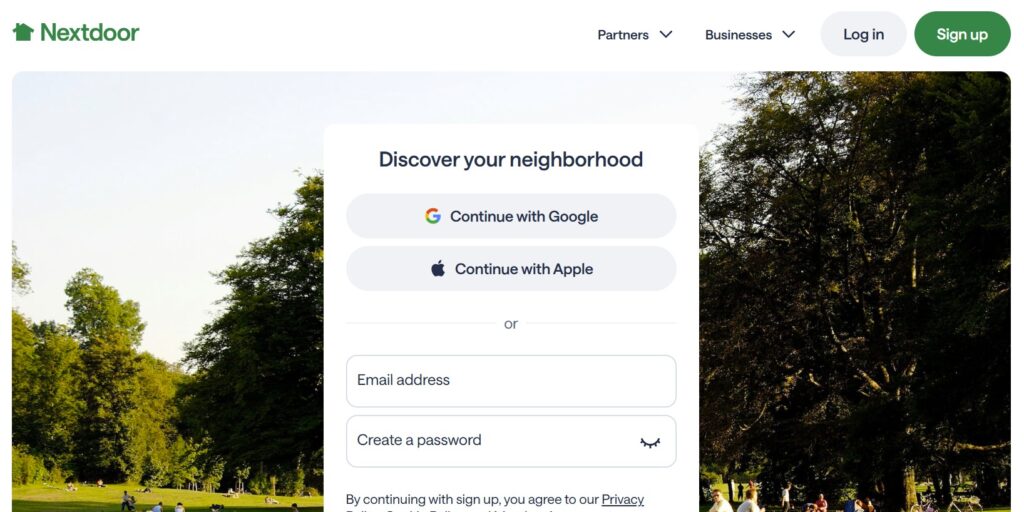
2.) Nextdoor
Nextdoor is a social network for local neighborhoods where you can post items for sale.
It’s free to list items, and if you meet in person and take cash, there are no fees.
But if you choose to use their “Checkout” feature to take payments through the app, they use a third party that charges a small processing fee.
Nextdoor works best for craft items that people in your own town would love, like handmade holiday decor, local art, and custom signs.
The audience is smaller than Facebook Marketplace, but the buyers tend to be more serious. And I think that’s a great benefit.
People on Nextdoor are a little less aggressive with lowball offers than Craigslist buyers. This is probably because they live down the street and might see you at the grocery store 😉
Vintage and secondhand focused
1.) Ruby Lane
Ruby Lane is a marketplace for vintage items, antiques, and collectibles.
They recently simplified their fees. As of 2026, they charge a $25 monthly shop fee.
The good news is that if you add at least 15 items to your shop during the month, they give you a $25 rebate. This makes your shop fee $0 for that month.
They don’t charge a “per-item” listing fee anymore, but they do take a 9.9% service fee when you make a sale (this fee is capped at $250).
Ruby Lane works best for vintage-inspired handmade crafts, antique restoration, and items that collectors love. The audience is usually older and more willing to pay higher prices for quality items.
If your crafts have a vintage look or you fix up old pieces, Ruby Lane is great.
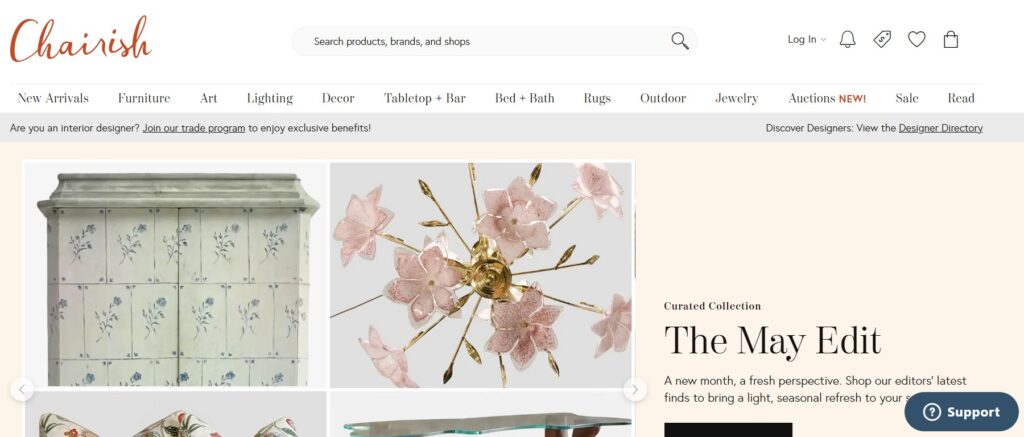
2.) Chairish
Chairish is a high-end marketplace for vintage furniture and home decor.
Their fees have gone up recently. If you have a professional account, they now take a 30% commission on sales (it used to be 20%).
This is steep, but they handle the customer service and most of the shipping logistics for you.
Chairish works best for handmade furniture, refurbished vintage pieces, and luxury home decor.
What you should also know is the approval process. It’s very strict. They only accept items that fit their “curated” look, which means they want things that look expensive and unique.
If you make “statement” furniture or luxury crafts and you want to reach buyers with deep pockets, Chairish is your perfect fit.
What are the best online platforms to sell handmade crafts?
The best places to sell crafts online depend on what you’re making. Etsy and Amazon Handmade get the most buyers. Social platforms like TikTok Shop and Instagram Shopping work if you already have an audience. Your own website gives you full control but zero built-in traffic.
Which websites offer the highest traffic for craft sellers?
Etsy and Amazon are the top two for craft-specific traffic. Etsy gets 454.6 million visits per month. Amazon Handmade taps into Amazon’s massive existing customer base. After those two, the traffic drops significantly on every other platform.
Compare online marketplaces for handmade items
Etsy: 6.5% per sale plus $0.20 listing fee; high traffic but high competition.
Amazon Handmade: 15% per sale, no listing fee, but you need to be approved.
iCraft: 0% commission, but you pay a monthly subscription.
Payhip: 5% fee on the free plan, or 0% fee on the $99/month plan.
eBay: Around 13.5% per sale plus $0.30 per order.
Which platform has the lowest fees for craft sellers?
Bonanza has one of the lowest transaction fees at 3.5%. If you’re doing high volume, iCraft is great because they take 0% commission (you just pay your monthly sub). Payhip is also a top choice since their free plan only takes 5%, which is much lower than Amazon’s 15%.
Do I need a business license to sell crafts online?
It depends on where you live and how much you’re selling. Most platforms like Etsy or Facebook Marketplace, don’t require one to start. But if you’re making a lot of money or selling in specific categories like bath products or baby items, you might need one. Check your local rules to be sure.
How do I decide which platform to use first?
Start where your buyers already shop. If you make unique, artistic items, try Etsy. If you want to reach a massive mainstream audience, try Amazon Handmade. If you already have a following on social media, use Instagram Shopping or TikTok Shop.
Final thoughts
The best places to sell crafts online aren’t the ones with the lowest fees. They’re the ones where your actual buyers already shop.
I see so many people try to build on 5 different platforms at the same time.
Look, if you try to do that, you’ll probably fail. It’s a lot more work than you think.
When you spread yourself too thin, you have less focus for each platform, and that always leads to worse results.
So pick one marketplace, set it up correctly, and give it 90 days before you decide if it’s working. Once you have consistent sales, add a second platform.
You don’t need to be everywhere. You need one platform that actually works, and then you build from there.
Here are more posts to give you ideas you can create and sell:
- 37 Profitable Crafts to Make and Sell for Extra Cash
- 17 Easy Crafts to Sell That Make a Profit Fast
- 35 Crafts That Sell Well And Make You Money

 Petra is a full-time blogger and CEO of Big Income Paradise. She teaches digital creators how to get more Pinterest traffic, generate leads, create better content & digital products, and make money online with the help of AI.
